
A return to win-win diplomacy
Reclaiming Diplomacy as America’s Most Effective Tool in the Hemisphere

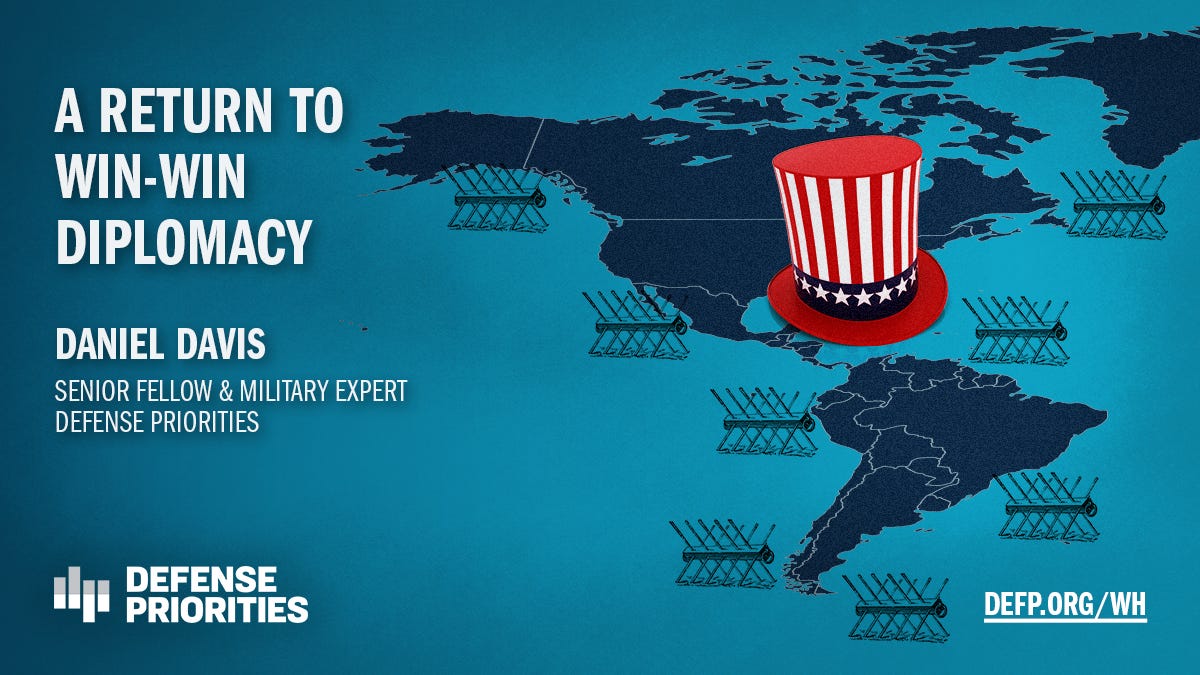
The United States under a second Trump term have sprinted to a military-first (some might suggest military only) foreign policy. While this method may produce some short term gains, the benefits are usually shallow, and almost always temporary. Long term, however, this method of conducting foreign policy could prove catastrophically bad, as such a focus is more likely to produce adversaries and outcomes antithetical to American interests. The best way to ensure a positive outcome for the United States in the Western Hemisphere is to stop focusing on a military-first policy and return to win-win diplomacy.
Too many elite voices in Washington have virtually jettisoned diplomacy as a primary means of attaining beneficial economic and national security outcomes for our country. Win-win diplomacy, in which the needs and desires of all parties get a fair hearing—even those on the lower end of the power spectrum—is messy, time consuming, and frequently frustrating. But it also produces the most beneficial outcomes that have the best chance at long-term success.
When all parties have buy-in on an outcome, when they feel they will derive long-term benefits from a given arrangement, they are more likely to abide by the terms of that arrangement.
When the U.S. instead leads with coercion or threats of blunt force, when the side or sides in inferior power positions feel they have no choice but to concede to outcomes unfavorable to them, they will abide only under duress and only to the minimum level required. They will also cease complying as soon as they feel they can do so without penalty. Meanwhile, other actors and states may try to covertly work against the United States and our interests out of spite, anger, or an attempt to impose pain for perceived injury.
America has pronounced differences with many of the governments in our hemisphere. Having all nations fully submit to our views is not necessary to our national security or economic benefit. Cuba, for example, poses no threat of any kind to the United States yet we have had an adversarial relationship with Havana since the early 1960s that benefits neither side. We could easily remove many sanctions and other restrictions on Cuba, costing us less, improving their quality of life, and possibly buying us more goodwill in the region.
Seeking win-win solutions with every nation in the hemisphere—whether currently friendly or adversarial—could go a long way toward lowering the cost of maintaining our national security and increasing our economic opportunities.